The following Special Interest Groups (SIGs) are organised under the umbrella of the SIG. CLRN members are invited to attend SIG events and/or join any of the groups.
SIG Leaders:
Dr Arianna Autieri, SNSF Ambizione Research Fellow, ZHAW, Zürcher Hochschule für Angewandte Wissenschaften, Switzerland
Dr Lauri A. Niskanen, University of Turku, Finland
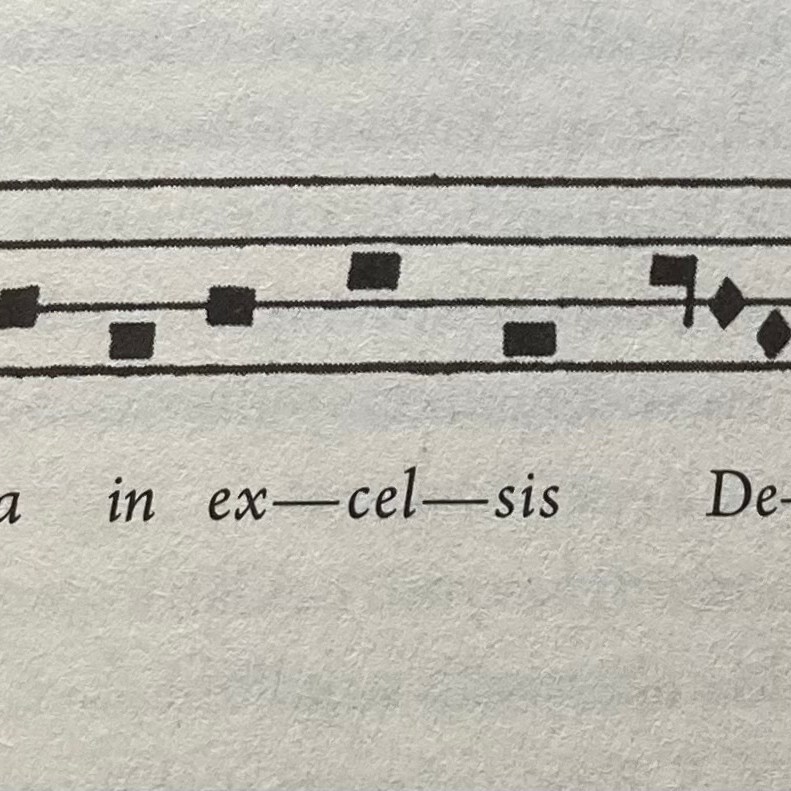
Translation of music has a long history which spans from the translation of opera libretti to translation within popular and audiovisual cultures, via poetry set to music and musicalized fiction. Due to its complex multimodal and interdisciplinary nature, the translation of music has received little attention within the field of translation studies. Recently, however, an interdisciplinary subfield of “Translation and Music” has been emerging (Desblache 2019: 68; Greenall et al. 2021: 21–22; Rędzioch-Korkuz 2024: 66). This fascinating new area has the potential to “enrich our understanding of what translation might entail, how far its boundaries can be extended and how it relates to other forms of expression” (Susam-Saraeva 2008: 191), when translation is increasingly more at risk of being seen as a mere mechanical process in the age of AI.
This research group investigates the many forms that the practice of music translation can take, bringing together musicians and music scholars working creatively with music, words, and translation; creative writers specialising in crafting lyrics or narratives for music, and translating music to narratives; translation scholars and translators working on the practice of translating music inter-linguistically or inter-semiotically. By bringing together diverse insights, we aim to foster new interdisciplinary collaborations and illuminate the creative aspects of music translation.
SIG leaders:
Madeleine Campbell, University of Edinburgh
Ricarda Vidal, King’s College London
The Experiential Translation Network (ETN) comprises a group of international scholars, artists and translators who investigate translation between languages (interlingual) and between media (intersemiotic) as a method of creation and communication, as a method for learning and teaching, collaboration and participation within multilingual, multicultural and multimodal settings.
Our research is grounded in theory and practice. Collaboration and the exchange of skills and knowledge is central to what we do.
The Network was founded in 2021 by Ricarda Vidal and Madeleine Campbell with funding from the AHRC as an initiative of the SIG Intersemiotic Translation and Cultural Literacy, which it has now replaced.
SIG Leader: Joanna Kosmalska, University of Łódź, Poland
The Migration SIG brings together international scholars, writers, artists, cultural practitioners and translators to explore how contemporary migration works of art reshape our understanding of migration. By tracing migration narratives across literature, theatre, film, visual arts and other creative forms, the group explores how artistic practices generate new perspectives on mobility, culture, society, multiculturalism, multilingualism and transnationalism.
We use the term “migration arts” in a broad sense: it encompasses literature, theatre, film, performance, photography, painting, drawing, sculpture, installation, digital art, music, dance, VR and AR art and other hybrid and interdisciplinary forms of creative practice. While our primary focus is on works produced since the 1990s—when, as Manfred B. Steger notes, journalists and scholars began to use the term “globalisation” to talk about the changes they were observing in various fields such as business, economics, social sciences and humanities—we also remain attentive to earlier traditions and other disciplines that inform today’s understandings of migration.
SIG Leader: Marion Schmid, University of Edinburgh, UK
Intermediality – understood as both the theory and practice of the interrelationships between media – has a particularly pertinent role to play in the dissemination of Cultural Literacy. In our era of increased media convergence, the understanding of intermedial phenomena is instrumental in giving readability to the world that surrounds us with its hybridised cultural productions. Just as important, Intermediality as essentially a state of in-betweenness has considerable potential as a tool for care and healing in our troubled times. Its non-dual, non-essentialist nature chimes with the need in our divided societies to break down boundaries between self and Other, to embrace fluidity and hybridity as parts of our identities, and to give voice to anxieties with a view to overcoming them. This Special Interest Group led by Marion Schmid (Professor, University of Edinburgh) in conjunction with Dr Fabien Arribert-Narce (Senior Lecturer, UoE) and the writer, filmmaker and MSc Intermediality alumnus Evan Falls, is planning an ‘Intermediality and Care’ Festival at the University of Edinburgh as its launch event. The Festival will consist of workshops, a showcase of intermedial works (by both students and local practitioners), and a creative atelier. It will bring together researchers, students, practitioners, care professionals and the general public with the explicit aim to foster an understanding of Intermediality and to showcase its therapeutic and educational potential.
The SIG held its inaugural event at the University of Edinburgh on 13th March 2026 with a day-long workshop. See here for the programme
SIG Leader: Abhimanyu Acharya, Western University, Canada
Saṃvāda is a Sanskrit word formed of two words, ‘Sam’- meaning equals, and ‘Vada’- meaning discourse or dialogue. Together, then, it means a dialogue, discourse, or conversation between equals. This SIG aims to bring together scholars and artists from around the world to engage in lectures and workshops on the idea of decolonization in its broadest sense.
SIG Leader: Zeina Dghaim
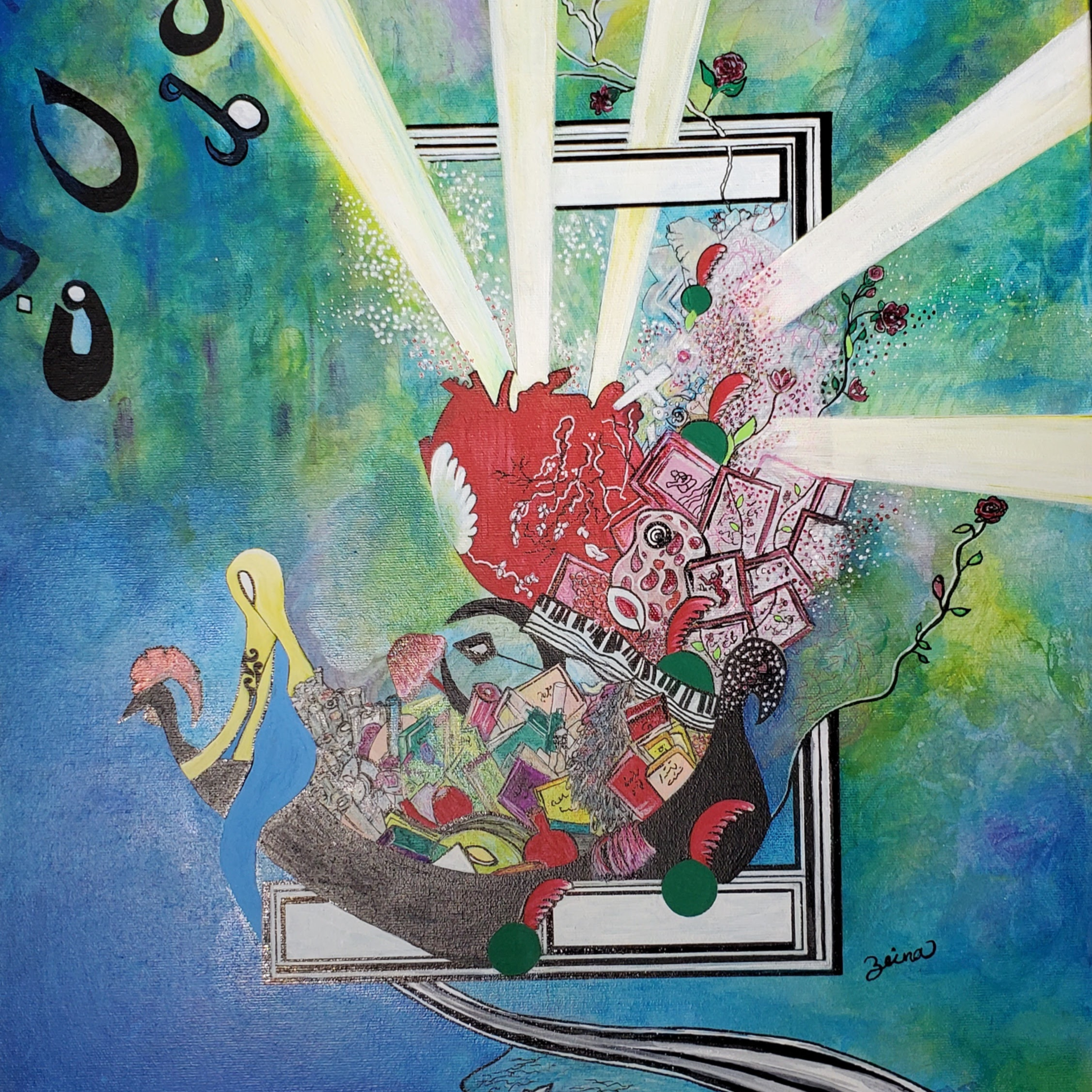
The Data Art Project (DAP) explores the data embedded in spiritual and philosophical texts, treating them as carriers of knowledge and meaning. Using natural language processing, we trace hidden patterns, symbolism, and recurring language, and translate these findings into visual form. Through this process, we honour and preserve the intellectual and spiritual work of our ancestors, allowing their ideas to evolve through new interpretations.
This first DAP series focuses on three influential works: Conference of the Birds by Fariduddin Attar, The Interior Castle by Santa Teresa de Ávila, and the lectures on the Ten Oxherding Pictures in the version taught by Yumon Mamada.
I’m looking for visual artists who love to illustrate and/or paint hand-made work (no digital art, no AI art), digital humanists who enjoy working with Natural Language Processing, or anyone who does both. Participants receive a small honorarium for their participation and contribution to this project. If you’d like to join DAP, please reach out through www.daproject.org or email me at thedataartproject@gmail.com

 Cultural Literacy Research Network